Inclusive Academy Video Facilitation Guide

Guide cover

Use this series of videos and trainer’s resources to help staff understand inclusive practices. Topics include:

  • Universal Design for Learning

  • Using videos and assistive technology to improve access

  • Supporting self-regulation and strategies for supporting dysregulation

  • Increasing mastery-oriented feedback

  • Co-generative dialogues

  • Creating opportunities for “stories of self”

  • Supporting executive function development

  • Optimizing learner voice

Resource Link

Source

Novak Education

DESE Deeper Learning Instructional Videos

See deeper learning practices in action in this series of videos featuring a range of ELA/literacy, math, history, and science classrooms PK-12.

Resource Link

Source

Massachusetts Department of Elementary and Secondary Education

Edwin Analytics Getting Started Guide and Videos - LINKS CHANGED

Edwin Analytics is a powerful reporting and data analysis tool that gives authorized districts and state level users access to new information, reports, and perspectives on education and programs that specifically support improvements in teaching and learning.  Available tools and reports help Massachusetts educators make informed decisions about how and where they can improve upon their teaching practices to provide an exceptional learning experience for their students.

Resource Link

Source

Massachusetts Department of Elementary and Secondary Education

2019 MTSS Leadership Institute Materials

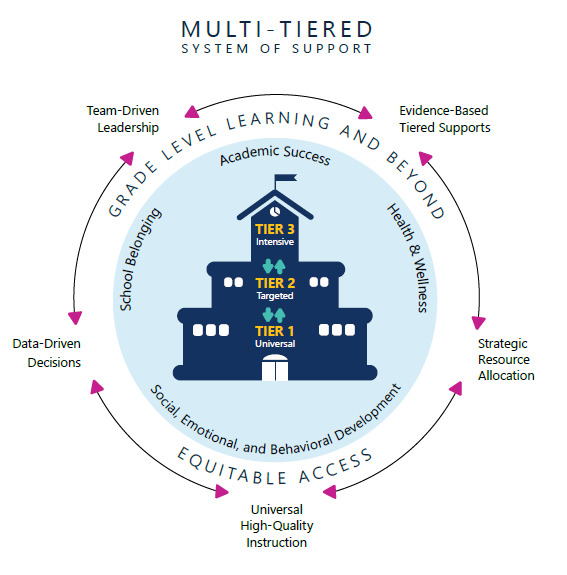
Multi-Tiered System of Support Leadership Institute Poster.

Note: The MTSS Blueprint was updated in 2025.

Welcome to the September 26 & 27th MTSS Leadership Institute. This professional development opportunity focused on giving district teams the opportunity to learn about the new MTSS blueprint and discuss how to lead within an MTSS framework. Please see below for breakout session material links.

Resource Links

Source

Massachusetts Department of Elementary and Secondary Education


Coherence Guidebook

Coherence Guide Infographic

CSDP Coherence Guidebook

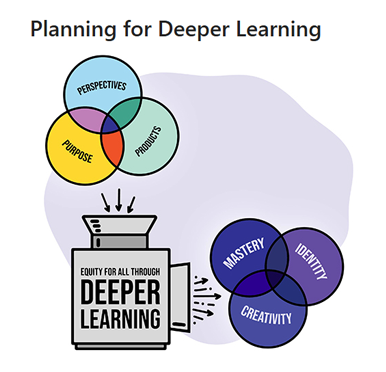
We believe great schools create the conditions that ensure all students regularly engage in deeper learning, where all students have consistent access to grade-level work that is relevant, real world, and interactive, which fosters not only mastery but also identity-development and creativity.

Over the last several years, the Department has published and utilized several frameworks and resources that capture elements of great schools and levers to create conditions that improve student outcomes. The Coherence Guidebook pulls them together into one place to illustrate a systems-level path toward deeper learning.

Resource Links

Explore the Coherence Guidebook and companion Self-Assessment

Appendix Resources

Source

Massachusetts Department of Elementary and Secondary Education

Wraparound Replication Cookbook: Recipes for Creating Strong School Culture and Addressing Social Emotional Barriers to Learning

This cookbook is the result of the Massachusetts Wraparound Zone Initiative - an initiative aimed at helping schools tackle both academic and non-academic barriers to student learning.  A rigorous evaluation of the Massachusetts Wraparound Zone Initiative (5 districts, 30 schools) conducted by the American Institutes of Research found that wraparound strategies made a significant contribution to improved student outcomes, particularly those related to student behavior, student support, and family engagement. This handbook represents the best thinking and strategy "recipes" on how to support the social emotional aspects of learning:

  • Addressing school culture and the social emotional aspects of learning

  • Rethinking systems for holistically identifying and addressing student academic and social emotional needs

  • Creating focused partnerships and coalitions

  • Treating parents as full partners

  • Big district and state takeaways

  • How to get started and how to manage priorities coherently

  • Profiles of six districts and the strategies they used

  • Links to resources, tools, templates and more

Resource Links

Wraparound Zone Cookbook

Individual Recipes

  1. Doing a Welcoming School Walkthrough

  2. Creating a School Culture Team

  3. Rethinking Recess

  4. Students as Culture Builders

  5. Assessing Student Strengths & Needs

  6. Student Success Teams (Student Support Teams, Child Study Teams, Whole Child Support Teams)

  7. Mobilizing around a Tiered System of Supports Framework

  8. Tracking Student Support

  9. Mapping Your Resources

  10. Creating Deep Wraparound Partnerships

  11. Managing Partnership Development at Your School

  12. Organizing as a Coalition of Partners

  13. Academic Parent Teacher Teams

  14. Parent House Parties | Academic Support Parties

  15. Rethinking Parent Academies and Cafes: Pooling Community Resources

Wraparound Video Series - hear Mass educators, students, staff, parents and partners highlight their strategies and the impact

Source

Massachusetts Department of Elementary and Secondary Education and School & Main Institute

Safe and Supportive Schools Self-Reflection Tool

Multi-Tiered System of Support Leadership Institute Poster.

Welcome to the revised Safe and Supportive Schools Implementation Guide & Self-Reflection Tool. The goal of the self-reflection Tool is to catalyze a reflective and creative inquiry-based, year-long or multi-year process to create and enhance a school`s work to become more safe and supportive for the entire school community (including but not limited to: students, staff, families, and community partners). This tool is intended to assist with documenting current practices that support students` behavioral health ranging from the whole school community to individual students that require more intensive supports. It also examines the role of various school professionals and staff in providing these supports. This process enables schools to identify their most pressing local priorities and create action plans that can be incorporated into School Improvement Plans to address these priorities. It may be helpful to revisit your school`s responses to this tool on a regular (e.g., quarterly, annual) basis to review progress and continually work towards full implementation on a range of practices that address and remove the barriers to learning.

Resources

Safe and Supportive Schools Self-Reflection Tool

Source

Massachusetts Department of Elementary and Secondary Education

Creating Positive Learning Environments: Recommendations and Resources to Support the Social Emotional Well-being of Students, Staff, and Families

Multi-Tiered System of Support Leadership Institute Poster.

Even in the midst of a pandemic, educators can create a safe and healthy learning environment that is joyful, engaging, and equitable for every child. On August 3, 2020 DESE released Creating Positive Learning Environments: Recommendations to Support the Social Emotional Well-being of Students, Staff and Families. This document includes a series of recommendations and sample resources and is designed to help districts and schools prioritize and support the social emotional well-being of students, staff, and families as they prepare for the new school year. DESE supported this guidance with a webinar to unpack the document and provide additional supports.

Resources

Source

Massachusetts Department of Elementary and Secondary Education

The School & Main Institute

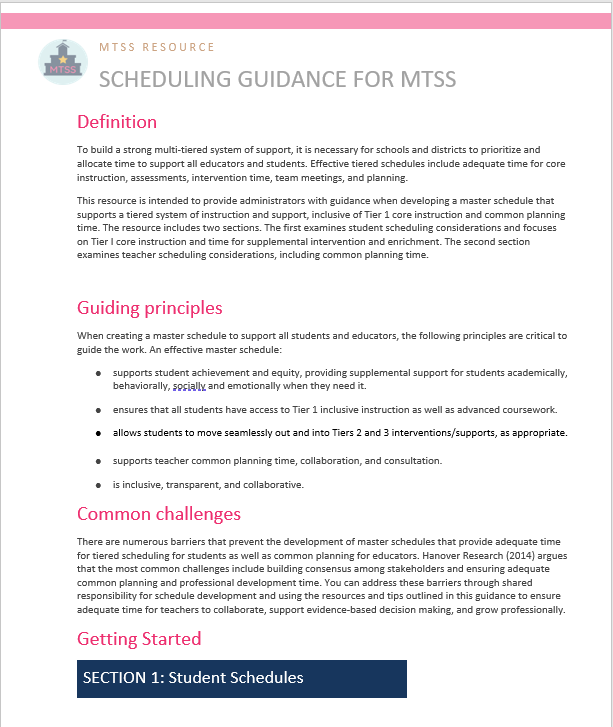
MTSS Scheduling Guidance

Multi-Tiered System of Support Leadership Institute Poster.

This resource is intended to provide administrators with guidance when developing a master schedule that supports a tiered system of instruction and support, inclusive of Tier 1 core instruction and common planning time. The resource includes two sections. The first examines student scheduling considerations and focuses on Tier I core instruction and time for supplemental intervention and enrichment. The second section examines teacher scheduling considerations, including common planning time.

Resource

Scheduling Guidance for MTSS

Source

Massachusetts Department of Elementary and Secondary Education

Novak Educational Consulting

RECA

Improving Math Instruction for Students with Disabilities Protocols for Mathematics and Special Education Leadership Teams

Multi-Tiered System of Support Leadership Institute Poster.

This series of five protocols are designed to promote collaboration between mathematics and special educators to improve math instruction and outcomes for all students including students with disabilities. The protocols are intended to assist district or school-based leadership teams by providing a structure for developing a shared vision, common language and foundational knowledge on mathematics instruction and the instructional needs of students with disabilities. These protocols are the result of a four-year collaboration between the Offices of Science, Technology, Engineering and Mathematics and the Special Education Planning and Policy at the Department of Elementary and Secondary Education, EDC and math and special educators from the districts participating in the Massachusetts Urban Math Support Network.

Resources

Protocol 1 Resources: Shared Beliefs About Mathematics Instruction for Students with Disabilities

Protocol 2 Resources: Essential Understandings About Students with Disabilities

Protocol 3 Resources: Essential Understandings About Rigorous Mathematics Instruction

Protocol 4 Resources: Aligning Barriers and Strategies

Protocol 5 Resources: Using an Accessibility Framework to Support a Group of Students

Source

Massachusetts Department of Elementary and Secondary Education

Education Development Center, Inc.

2020 MTSS Planning Institute Materials

Multi-Tiered System of Support Leadership Institute Poster.

Note: The MTSS Blueprint was updated in 2025.

Welcome to the February 2020 MTSS Planning Institute. This opportunity was developed in response to educator feedback from September’s MTSS Leadership Institute, requesting additional guidance, professional development, tools, resources, and facilitated planning time to help them design, implement, and lead cohesive tiered systems of support.

Resource Links

Access all conference materials.

Breakout Sessions Day 1: MTSS Overview Session

Breakout Sessions Day 1: MTSS Implementation Modules

Breakout Sessions Day 2: Student Opportunity Act Breakouts

Breakout Sessions Day 2: Team Planning Time

Source

Massachusetts Department of Elementary and Secondary Education


A Parent's Guide to Special Education in Massachusetts

A Parent’s Guide to Special Education logo.

This module provides users with an interactive learning experience so that they can learn what they need to know about the special education process. While this guide is geared towards families, it will be useful to anyone who needs to know more about topics like referral, evaluation and eligibility (among others).

Resource Link

A Parent’s Guide to Special Education in Massachusetts

Source

Massachusetts Department of Elementary and Secondary Education


Leading with Access & Equity 2018 Conference Materials

Leading with Access and Equity Event Poster.

Welcome to the November 1, 2018 Leading with Access & Equity Conference! This annual professional development opportunity focuses on systems and strategies to meet students’ holistic needs and ensure that every child has equitable access to a world-class education. The event represents a collaboration across multiple offices and initiatives at DESE and focuses on topics including, but not limited to: creating a pipeline of diverse educators, developing multi-tiered systems of support, equitable access to high quality curriculum, bilingual education, ensuring racial and cultural equity, effectively engaging families, student mobility, approaches to addressing students’ mental health needs, integrating social emotional and academic learning, and more. Please see below for breakout session material links.

Resource Links

Access all breakout session materials.

Access the 2019 Leading with Access & Equity Conference materials.

Source

Massachusetts Department of Elementary and Secondary Education

 

Leading with Access & Equity 2019 Conference Materials

Leading with Access and Equity Event Poster.

Welcome to the October 24, 2019 Leading with Access & Equity Conference! Please see below for breakout session material links.

View the incredible performance from the Springfield High School of Science and Technology (SciTech) Band!

Resource Links

Breakout Session Materials:

Access all breakout sessions.

Access general conference materials.

Access 2018 convening materials.

Source

Massachusetts Department of Elementary and Secondary Education

 

Conditions for Learning Surveys

Sample question from Conditions for Learning Survey.

The Conditions for Learning surveys (CFL) were developed collaboratively and field-tested by districts and Massachusetts Department of Elementary & Secondary Education staff involved in the Urban Leaders Network for School Climate & Student Support. The CFL metric and survey tools focus on the holistic “conditions” (including social emotional learning) students need in order to learn in a school setting. The CFL contains surveys around the following domains: school climate, academic engagement, social emotional learning, parent & family engagement, and systems of student support, with surveys for students, staff, and families. Schools and districts are welcome to utilize these survey tools.

Resource Links

Conditions for Learning Surveys

Source

Massachusetts Department of Elementary and Secondary Education with School & Main Institute
 

MTSS Tiered Resource Map

Picture of resource map template.

Note: The MTSS Blueprint was updated in 2025. Adjust this template to support the four student support domains in the updated Blueprint.

This resource mapping template will help you inventory the Curriculum & Instruction/ Interventions, Assessments, and Data-Based Decision practices you are currently using (or have the goal of using) at each tier. Map away!

Resource Link

MTSS Tiered Resource Map (word document)

Source

Massachusetts Department of Elementary and Secondary Education with Novak Educational Consulting and Rodriguez Educational Consulting Agency
 

Massachusetts MTSS Blueprint

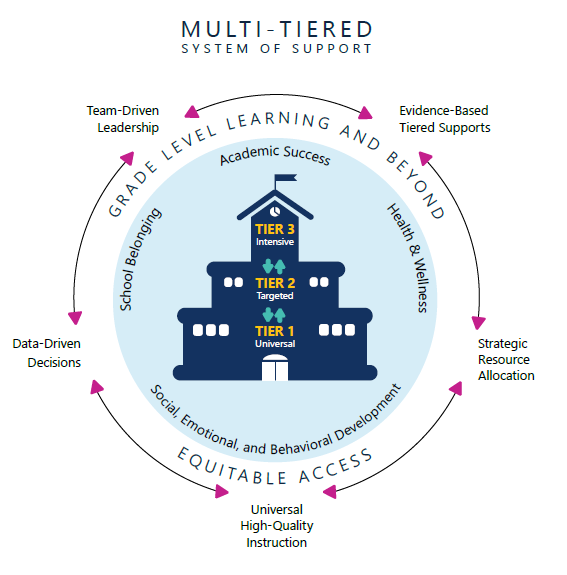
All students are capable of success. A Multi-Tiered System of Support (MTSS) is a framework for how school districts can build the necessary systems to ensure that each and every student feels connected to their learning community and can access grade-level learning and beyond.

The MTSS Blueprint for Massachusetts was updated in 2025. The updated Blueprint unpacks MTSS from three perspectives: why it is important, what it entails, and how to approach implementation.

Resource Links

2025 MTSS Blueprint

Source

Massachusetts Department of Elementary and Secondary Education 

The School Climate Survey Suite

Cover page of the School climate survey suite document.

The School Climate Survey Suite is a set of four multidimensional surveys to measure student, teacher, administrator, faculty, and family perceptions of school climate. The surveys are brief, reliable, and valid for assessing perceived school climate among students in Grades 3-12. Teams can use each survey separately or in combination to assess perceptions. Each survey includes a set of demographic questions about the participant and a number of questions related to school climate with Likert-scale response option.

Resource Links

School Climate Survey Suite

Source

OSEP Technical Assistance Center on Positive Behavioral Interventions and Supports, University of Oregon


Principles of Effective Practice for Integrated Student Support

Center for Optimized Student Support Logo.

For over half a century, it has been recognized that contexts beyond school – like health, social-emotional well-being, family, and neighborhood – can account for up to two-thirds of the variance in student achievement. Developmental systems theories and neurobiological disciplines have more recently begun to explain the link between these outside factors and educational outcomes. This research provides insight into why experiences like poverty and trauma can inhibit learning, and what can be done to counteract their effects.

Resource Links

Principles of Effective Practice for Integrated Student Support

Source

Boston College Center for Optimized Student Support