
Resource Profiles
New Resource Search
← Return to Find Resources | MTSS
Resource Results

Child Mind Institute Video Library
This sizeable collection of short videos features expert clinicians and psychologists sharing tips on a wide range of social emotional and mental health topics — everything from helping students with a learning difference build confidence, to screen time, to parenting pre-teens, to spotting possible signs of disabilities.
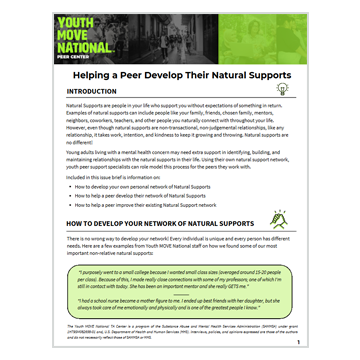
Youth Move National: Mental Health Support Tools
Youth MOVE is a youth-driven, chapter membership organization focused on improving systems and services that support positive growth and development. This includes training and professional development for mental health workers, with a focus on strengthening youth voice, peer support, and leadership in systems of care. Other tools and resources are designed specifically for young people, to use themselves or in their role as a peer supporter or advocate.
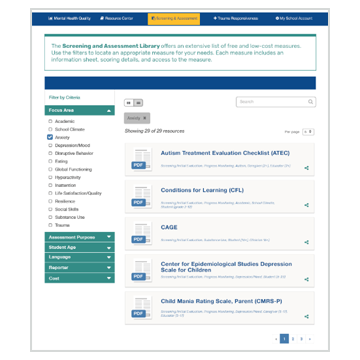
PK-12 Mental Health Screening & Tiered Support Planning Tools
These tools provide an orientation to different mental health and social emotional/behavioral assessment screeners schools can use to identify students who may need targeted or intensive support. The SHAPE library is free to use but requires users to register for an account.
Comprehensive Health and Physical Education Curriculum Guide
In 2023, MA DESE released an updated Comprehensive Health and Physical Education (CHPE) Curriculum Framework that provides standards and guidance for effective CHPE programs. This guide is intended to provide districts with an overview of how available CHPE curricula align with the CHPE Framework.
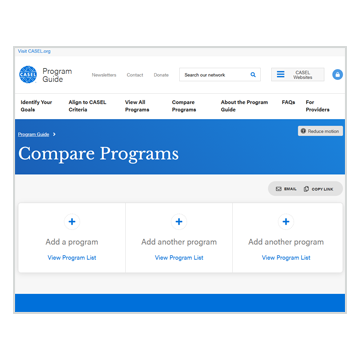
CASEL SEL Program Guide & Comparison Tool
Use CASEL’s online tool to review and compare programs that help students develop strong social and emotional skills. Search by grade or grade level, program approach, setting, student characteristics, and other criteria.
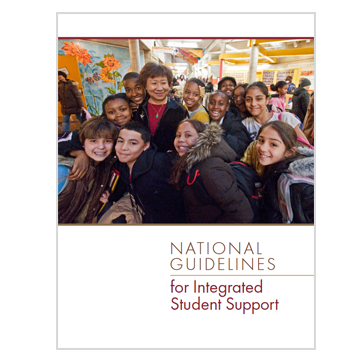
National Guidelines for Integrated Student Support
This report distills the collective expertise of leading researchers and practitioners from the nation's most rigorously evaluated student support models. By analyzing successful interventions, the working group identified the core practices essential for high-quality implementation. This resource serves as a framework to help schools and communities build effective, comprehensive systems that address the holistic needs of every student.
Implementing MTSS in Secondary Schools
Practical strategies to address logistical and instructional challenges secondary schools often encounter implementing MTSS including intervention blocks, scheduling, teaming, and other practices. The 2022 report focused on early implementation. The 2025 report updates and extends the toolkit of strategies and includes additional resources and examples. It also expands the focus of MTSS to include student well-being.
Inclusive Academy Video Facilitation Guide
Use this series of videos and trainer’s resources to help staff understand inclusive practices
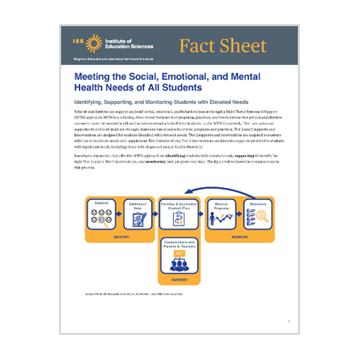
Using MTSS to Support Student Well-Being: Fact Sheets for Schools
Use this series of fact sheets to refine tiered supports for student social emotional development and mental wellbeing. Topics include the research basis, student identification, data use, and educator wellbeing.
Massachusetts SLIFE Toolkit
This online module provides tools, practices, and resources to help schools serve students with limited or interrupted formal education (SLIFE).
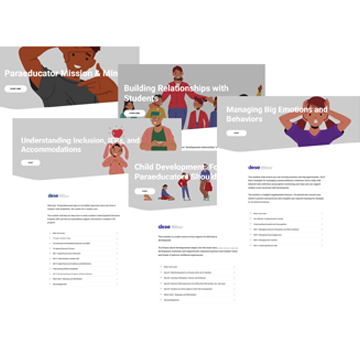
DESE Paraeducator e-Learning Modules
Use these modules to orient and train new paraeducators and provide a deeper dive into specific areas of practice.
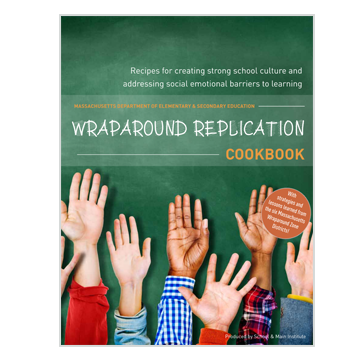
Wraparound Replication Cookbook: Recipes for Creating Strong School Culture and Addressing Social Emotional Barriers to Learning
This cookbook is the result of the Massachusetts Wraparound Zone Initiative, an initiative aimed at helping schools tackle both academic and non-academic barriers to student learning, and includes recipes for strengthening school culture, creating strong student success teams, engaging family members as partners, building community partnerships and coalitions, and much more.

Safe and Supportive Schools Self-Reflection Tool
The revised Safe and Supportive Schools Implementation Guide & Self-Reflection Tool provides an inquiry-based year-long or multi-year process to document current practices that support students` behavioral health ranging from the whole school community to individual students that require more intensive supports.

Social and Emotional Learning in Math
Resources describing connections between the Massachusetts Mathematics Curriculum Frameworks and development of student social and emotional skills.

Online TAP Social Emotional & Behavioral Health Training Series - Boston Children’s Hospital
These free training modules for educators are part of the Clough Foundation Training and Access Project (TAP) Online series, which offers free courses designed to build the capacity of school communities to address social-emotional learning and behavioral health. TAP is a part of the Boston Children’s Hospital Neighborhood Partnerships Program (BCHNP).
How Learning Happens: Supporting Students’ Social, Emotional, and Academic Development
This landmark consensus report issued by the National Commission’s Council of Distinguished Scientists unites scholars from multiple fields to affirm the interconnectedness of the social, emotional, and academic components of learning.

Nashville Case Study: Implementing Social Emotional Learning Across the District
Excellent Edutopia series on how Metro Nashville Public Schools is bringing coherence and alignment to social emotional learning implementation.
SEL 3 Signature Practices Playbook
Integrate social and emotional learning throughout the day, in classrooms, during professional learning, and in meetings. This guide focuses on three areas, with 10-15 specific examples for each: Inclusive Welcome, Engaging Strategy, and Intentional Close.
Supporting and Responding to Students’ Social, Emotional, and Behavioral Needs: Evidence-Based Classroom Strategies for Educators
Concise guide - updated in 2025 - that provides positive behavior support practices, a self-assessment tool and classroom decision-making chart, and classroom-based practice examples organized by topic, e.g., setting expectations, developing routines, using behavior-specific praise, responding to problem behavior, collecting and using behavior data, etc.
Navigating SEL from the Inside Out - SEL Program Guides
There are many social emotional learning programs out there! These two guides provide detailed information for more than 40 SEL programs for PK-12 school and out-of-school time settings.
← Return to Find Resources | MTSS